HCI 325
NAVER map
for global users
CROSS-CULTURAL HCI ANALYSIS
Examining how Korea's dominant navigation app serves - and challenges - international visitors, and how Human- Centered Design can support more intuitive navigation across cultures.
ABOUT THIS PROJECT
HSE 325 Cross-Cultural HCI Final Project
This project was completed as the culminating experience of the HSE 325 Human-Computer Interaction Summer Study Abroad Program in Seoul, South Korea.

Seoul is one of the most technologically advanced cities in the world, and during my time studying there, I quickly learned how deeply technology is embedded in everyday life. From ordering food and purchasing transit tickets to making payments and finding directions, nearly every interaction relied on digital systems.
Of all the technologies I encountered, NAVER Maps had the greatest impact on my experience. As an international visitor, I depended on the app daily to navigate Seoul and use its public transportation system. While NAVER Maps is a powerful and widely used tool, it revealed an important challenge: products designed for local users often assume cultural knowledge, systems familiarity, and design conventions that may not be intuitive to visitors.
This project explores how those assumptions can create usability barriers for tourists and proposes design improvements to make navigation and tourism in Korea more accessible and inclusive for first-time users.
REASEARCH QUESTION:
How does the cultural design logic embedded in Naver Map create interaction barriers for international users, and how can cross-cultural design principles inform a more globally adaptive redesign?
BACKGROUND
About NAVER Map
South Korea's most-used mapping application, built with a design philosophy shaped by Korean digital culture and information density preferences.
As South Korea's most widely used navigation app, NAVER Maps combines transit planning, local recommendations, reviews, and navigation tools within a highly detailed interface. This design reflects the needs and expectations of Korean users, who are accustomed to information-dense systems and local transportation norms. For international visitors, however, the same interface can introduce usability challenges through information overload, unfamiliar interaction patterns, and assumptions about cultural knowledge. The result is a gap between the user's mental model and the way information is presented, increasing effort, uncertainty, and navigation anxiety.
70%
Korean
Market
Share
36M
Monthly
Active
Users
18M+
Int'l
Visitors
Per Year

These usability challenges matter because NAVER Maps is the dominant navigation platform in South Korea. With more than 36 million monthly active users, approximately 70% domestic market share, and over 20% of users coming from outside Korea, the app serves both local residents and a growing international audience.
As South Korea continues to welcome more than 18 million international visitors each year, improving the experience for foreign users is more than an accessibility issue. It's also a meaningful market opportunity to support tourism, increase user confidence, and strengthen NAVER Maps’ position against competitors like KakaoMap and Google Maps.
BACKGROUND
Inside NAVER MAP's Interface
Exploring the design, features, layout, and information architecture that shape the NAVER Maps experience.
NAVER Maps is a feature-rich navigation platform that combines mapping, public transportation, local search, reviews, reservations, and trip planning within a single application. The interface is designed to provide users with immediate access to a wide range of tools and information, emphasizing efficiency and functionality over simplicity.
Throughout the application, users can quickly transition between navigation tasks, business discovery, transit planning, and saved content without leaving the platform. The result is a comprehensive ecosystem that serves as both a navigation tool and a gateway to everyday activities throughout South Korea.
Play the video to the right to see NAVER Maps in action and explore the annotated menu for a closer look at the application's key interface elements, navigation structure, and design characteristics.

-
NAVER brand green (#03C75A) used as the primary accent color
-
Predominantly white background (day mode) or black background (night mode) with gray secondary elements
-
Color-coded icons and categories for rapid recognition
-
Rounded cards, buttons, and interface components
-
Persistent bottom navigation bar
-
Search-first interaction model
-
Layered menus and expandable panels
-
Multiple entry points to similar functions
-
Turn-by-turn navigation (walking/driving)
-
Public transit routing
-
Business and restaurant search
-
User reviews and ratings
-
Reservations and bookings
-
Saved locations and favorites
-
Real-time traffic and transit updates
-
Street View and 3D map views
-
Information presented through cards, lists, and map overlays
-
Extensive use of shortcuts and quick-access buttons
-
High feature visibility on the home screen
-
Integration of navigation and discovery functions within a single interface
-
Search bar
-
Category shortcuts
-
Filter buttons
-
Floating map controls
-
Transit mode selectors
-
Location and navigation controls
-
Bookmark and sharing functions
ANALYSIS
NAVER Maps serves a diverse ecosystem of users and stakeholders whose needs directly shape the platform's design. Primary users include local residents who rely on the application for daily navigation and discovery, alongside international visitors navigating unfamiliar environments and transportation systems. Supporting stakeholders include local businesses, transit providers, and NAVER itself, which must balance user experience, platform growth, and business objectives. Understanding these groups is essential for evaluating how effectively the system supports navigation, decision-making, and everyday interactions throughout South Korea.
Stakeholder needs have become increasingly important as Google Maps expands its capabilities within South Korea through improved access to mapping data and navigation services. Because Google Maps is already familiar to many international travelers, NAVER faces growing pressure to provide an experience that not only meets the needs of domestic users but also appeals to foreign visitors. As competition increases, creating a more accessible and intuitive experience for international users represents both a usability opportunity and a strategic business advantage.
NAVER MAP's USers & Stakeholders
Exploring the users, organizations, and business interests that shape the NAVER Maps experience.
NAVER
NAVER is the organization responsible for developing, maintaining, and expanding the NAVER Maps platform. As a stakeholder, NAVER seeks to balance user satisfaction, platform engagement, business partnerships, and long-term growth within South Korea's digital ecosystem.
KOREAN USERS

Korean users are the platform's primary audience and rely on NAVER Maps for daily navigation, transportation planning, business discovery, and local services. Their familiarity with Korean culture, language, and transportation systems shapes many of the platform's design decisions and feature priorities.
FOREIGNERS

Foreign users include tourists, international students, expatriates, and business travelers navigating unfamiliar environments in South Korea. They often rely on NAVER Maps to overcome language barriers, understand transportation systems, and locate destinations and services.
BUISNESSES

Businesses include restaurants, retailers, attractions, and service providers that use NAVER Maps to increase visibility and attract customers. Their presence on the platform contributes location data, reviews, and operational information that support the overall user experience.
ANALYSIS
UX Design and cultural analysis
Examining how design principles and cultural values shape the NAVER Maps experience.
The design of NAVER Maps is heavily influenced by the cultural values, communication patterns, and technological expectations of South Korean society. As a highly connected and digitally integrated nation, South Korea places significant value on efficiency, convenience, predictability, and access to information. These cultural characteristics shape not only how users interact with technology, but also how digital systems are designed to support everyday activities such as navigation, transportation, commerce, and social decision-making.

Cultural
Influences

Field insights
&KEY FIndings
NAVER Maps presents a large amount of information within a single interface, including navigation tools, transit options, reviews, reservations, and local recommendations. While this increases visual complexity, it allows users to access comprehensive information without navigating multiple screens. This design reflects South Korea's high Uncertainty Avoidance Index (85), as users often prefer detailed information that reduces ambiguity and supports informed decision-making.
The application requires users to process significant amounts of information simultaneously. While experienced users may benefit from immediate access to numerous features, first-time users can experience cognitive overload when navigating unfamiliar options. This complexity is partially influenced by South Korea's strong Uncertainty Avoidance, where providing more information is often prioritized over simplifying interfaces in order to support confidence and predictability.
NAVER Maps displays route information, transit schedules, business ratings, and recommendations directly within the interface, reducing the need for users to remember information across screens. By making relevant information immediately visible, the platform supports faster decision-making. This design aligns with South Korea's preference for reducing uncertainty by making information readily accessible at the point of use.
Affordances describe the actions users can perform, while signifiers communicate how those actions should be performed. Although NAVER Maps contains many interactive elements, some icons and functions rely on cultural familiarity and may not be immediately understandable to international visitors. This reflects Korea's high-context communication style, where systems often assume shared knowledge and cultural understanding among users.
The platform provides continuous feedback through route recalculations, real-time transit updates, estimated arrival times, and location tracking. Immediate feedback reassures users that actions have been successfully completed and helps reduce uncertainty during navigation. This emphasis on responsiveness reflects both Korea's high Uncertainty Avoidance and the cultural influence of Pali Pali (빨리빨리), which values speed and efficiency.
NAVER Maps prioritizes rapid task completion by providing direct access to a wide range of tools and services. Experienced users can quickly navigate workflows without progressing through multiple layers of menus, reducing interaction time and increasing efficiency. This design strongly reflects the influence of Pali Pali, which emphasizes speed, convenience, and responsiveness in everyday activities.
The interface is primarily designed around the needs of experienced local users rather than first-time visitors. Feature accessibility and efficiency are prioritized over extensive onboarding or simplified workflows. This approach aligns with Korea's high-context communication culture, where familiarity and shared understanding are often assumed rather than explicitly taught.
Visual hierarchy refers to the organization of information that guides user attention and prioritizes actions. NAVER Maps distributes attention across many services and features rather than focusing on a single primary task. This reflects the expectations of South Korea's mature digital ecosystem, where users often expect multifunctional applications capable of supporting numerous activities from a single interface.
The Gulf of Execution describes the gap between a user's goal and their ability to determine how to achieve it within a system. For local users, this gap is relatively small because interface elements align with familiar cultural norms, transportation systems, and digital conventions. The shared understanding created by Korea's collectivist culture and high-context communication style helps users interpret available actions more easily.
UX Design principles in naver
REDESIGN
proposed re-design and design rationale
Applying design and interaction principles and cultural considerations to improve usability for international visitors while preserving the efficiency valued by local users.
TOURIST MODE TOGGLE
A Tourist Mode toggle was introduced to allow users to switch between the standard information-dense interface and a simplified tourist-focused experience. This supports Flexibility and Efficiency of Use by accommodating both local and international users while preserving the functionality preferred by experienced Korean users.
TOURIST MODE ONBOARDING
A guided onboarding experience was added when Tourist Mode is activated to provide information about Korean transportation systems, payment methods, and cultural expectations. This modification narrows the Gulf of Execution by helping visitors understand how to complete common transportation and navigation tasks before they encounter them. It also helps bridge differences associated with Korea's high-context communication style and high Uncertainty Avoidance Index.
NEW FEATURE!
TOURIST ONBOARDING: CLOSING THE Cross-CULTURAL GAP

WELCOME TO SOUTH KOREA
Would you like help navigating Korea with local guidance, transit tips, and cultural insights?
Don't show this message again

TOURIST TUTORIAL 1 OF 5
WELCOME TO KOREA!
You just landed — exciting! This quick guide will help you get around confidently from day one.
Naver Map is your best tool for navigating Korea — follow along to learn how to use it like a local.
TOURIST TUTORIAL 2 OF 5
-
Pick one up at any GS25, CU, 7-Eleven — or at any subway station vending machine.
-
Load ₩20,000–30,000 to start — covers 3–4 days of travel.
-
T-money can only be reloaded with cash — keep Korean won on you.
-
Use it on subways, buses, and taxis — one card does it all.
-
Balances under ₩20,000 can be refunded in cash at convenience stores.
-
Most buses don't take cash — the card is essential
GET A T-MONEY CARD FIRST
-

TOURIST TUTORIAL 3 OF 5
-
Look down — floor stickers guide your direction and show where to queue on the platform.
-
Tap in AND tap out with your T-Money Card
-
Many busses come past the bus stops. Actively look for your bus number and move toward it,
-
Board at the front, exit at the back — tap your card both times.
-
Press the red stop button before your stop — the driver may not stop unless you do.
THE SUBWAY & BUSSES
-
.jpg)
TOURIST TUTORIAL 4 OF 5
-
Keep it quiet — no phone calls, whisper conversations only.
-
Don't sit in pink seats (pregnant women) or seats with symbols above them — these are reserved for elderly and disabled.
-
Always give up your regular seat for elderly, pregnant, or disabled passengers.
-
Move toward the exit doors before your stop arrives — hold the railings, stops and starts can be sudden.
-
Stand to the right on escalators — keep the left side free for people walking.
-
Elevators are primarily for elderly, disabled, parents with children, and people with large luggage — take the stairs or escalator if you can.
HOW TO RIDE LIKE A LOCAL
-

TOURIST TUTORIAL 5 OF 5
-
Personal space is smaller here — if someone stands close, it's totally normal!
-
Queues are taken seriously — always wait your turn at stations and stops
-
Koreans move fast — be ready and prepared! Locals call it "Pali Pali" (빨리빨리) — it means "hurry hurry" and it's a way of life.
-
Keep moving in busy areas — stopping suddenly in walkways causes congestion.
-
A small nod goes a long way when interacting with locals
MOVING THROUGH KOREA
-
TUTORIAL COMPLETE!
You're Ready.
Thanks for completing the Naver Map Tourist Tutorial. You now know how to get around, what to expect, and how to move through Korea like a local. Now get out there and explore. 빨리빨리! (Hurry hurry!)
.png)
BEFORE
T-MONEY RELOAD AND ATM/CURRENCY EXCHANGE
Quick access to T-Money reload locations and ATM/Currency exchange was integrated directly into the application, reprsented by cirucular "T" markers, and circular "$" markers. This supports User-Centered Design and further narrows the Gulf of Execution by making critical resources for visitors visible and reducing the effort required to determine the next step in a task.
REDUCED HOME SCREEN INTERACTIONS
Visible interactions on the landing page were reduced from 32 clickable interactions, to 12, decreasing cognitive load and decision complexity. This modification supports Choice Reaction Time principles and improves Visual Hierarchy by emphasizing primary tasks.
PROGRESSIVE DISCLOSURE
Secondary features were moved into expandable menus (Explore >) and settings (located at bottom left, reducing interface clutter while preserving access to advanced functionality. This modification supports both Progressive Disclosure and Aesthetic and Minimalist Design.
TRANSIT AND NAVIGATION CONSOLIDATION
Navigation entry points were reduced from four options to two, creating a more intuitive route-planning experience. This aligns with user Mental Models, supports Hick's Law, and narrows the Gulf of Execution.
SIMPLIFIED VISUAL DESIGN
The color palette was simplified and information prioritization was improved to reduce visual clutter. This strengthens Visual Hierarchy and supports Aesthetic and Minimalist Design.
OVERALL IMPACT
The redesign preserves NAVER Maps' information-rich functionality while improving usability for international visitors. By reducing visible interactions, simplifying navigation pathways, and introducing Tourist Mode, the design lowers cognitive load, improves task discoverability, and narrows the Gulf of Execution while still respecting Korean cultural preferences for efficiency, structure, and information accessibility.
.png)
AFTER
REFLECTION
Reflections from south korea
Experiences, observations, and lessons from my time abroad.
CHRISTINA
IN
KOREA

If there is one thing I will remember most about South Korea, it's the extraordinary attention to detail. It seemed to be woven into nearly every aspect of daily life. I noticed it everywhere: in the carefully designed advertisements, the digital interfaces, the presentation of food and drinks, and the thoughtful way public spaces were organized. Korea felt like a country built around experiences. Themed pop-ups, beautifully curated cafés, historic palaces, and even local markets, there was a clear sense that the details mattered. Even routine activities felt intentionally designed to be efficient, engaging, and memorable.
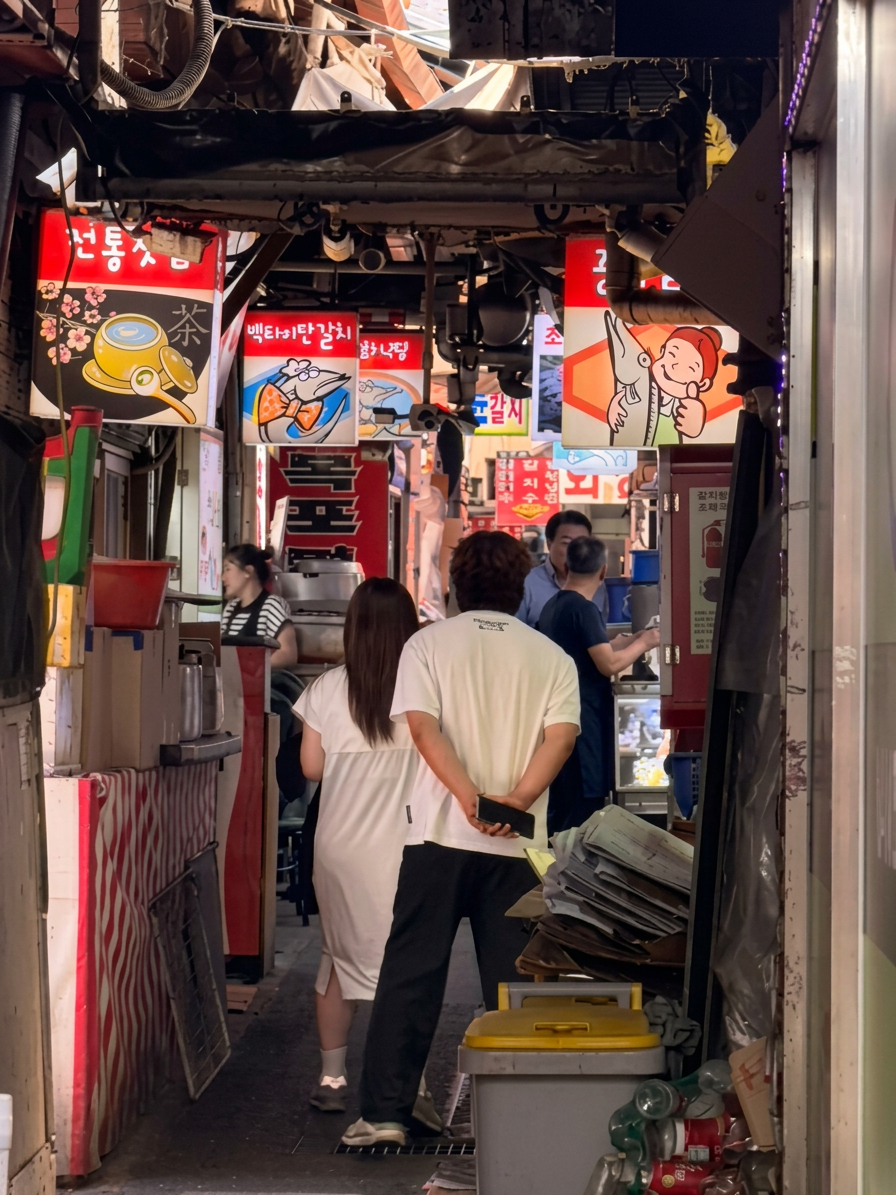
That emphasis on experiences extended far beyond aesthetics. Throughout my time in Korea, I was fascinated by how often technology, entertainment, education, and culture were blended together into immersive experiences. Places like the Samsung Innovation Museum, Hyundai experience spaces, HiKR Ground, and the National Museum of Korea used digital media, interactive exhibits, projection technology, and hands-on activities to transform what could have been passive visits into memorable experiences. Rather than simply presenting information, these spaces invited visitors to engage, explore, and participate. It really demonstrated that Korea places a strong value on creating environments and experiences that are not just functional, but engaging, meaningful, and visually stunning.

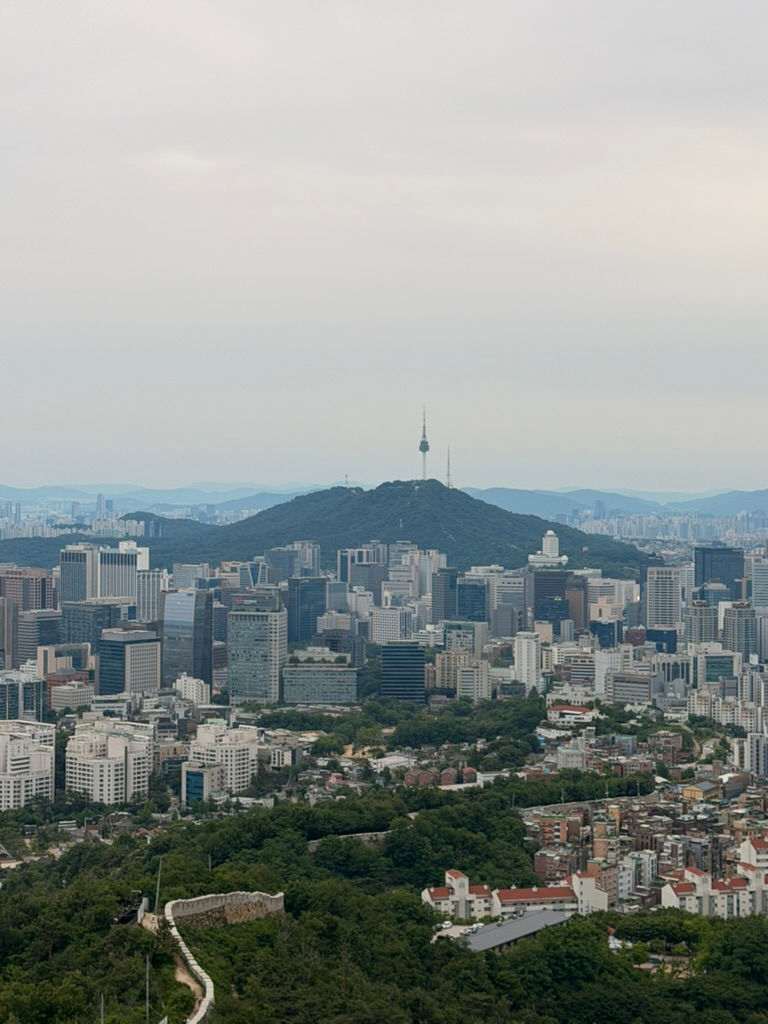
The same attention to detail was evident throughout Seoul itself. Despite being one of the largest and most densely populated cities in the world, it somehow felt very organized. Millions of people move through the city every day using an extensive network of subways, buses, and trains that operate with remarkable precision. Yet alongside the skyscrapers and busy commercial districts were riverside paths, mountain trails, parks, palaces, and Buddhist temples that offered moments of quiet reflection. The contrast between cutting-edge technology and centuries of history gave the city a character unlike anywhere I have visited before.
The Buddhist temples were among my most favorite places I experienced. Their vibrant colors, intricate artwork, and peaceful atmosphere offered a striking contrast to the fast pace of city life. They felt both grand and welcoming, It was interesting to be an observer of some of the cultural and spiritual traditions that continue to shape Korean society. I found myself constantly reflecting on how seamlessly Korea balances cultural preservation and innovation.

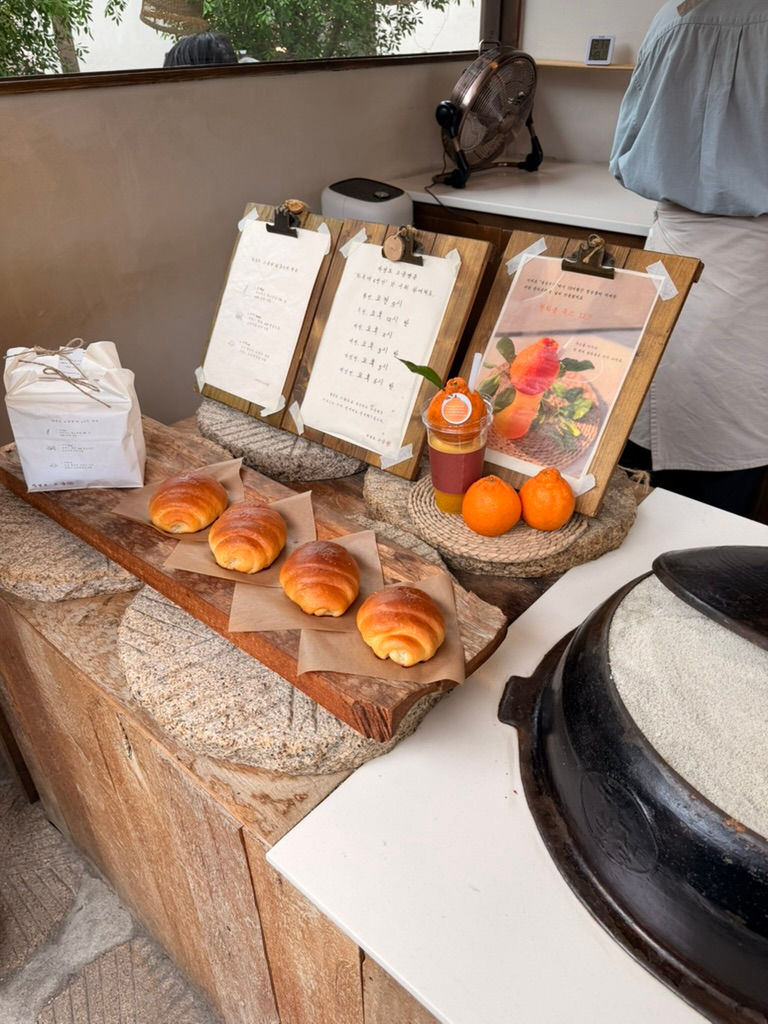
Of course, no reflection on Korea would be complete without mentioning the food. Cafés seemed to exist on nearly every corner, each with its own unique atmosphere and display cases filled with beautiful pastries, cakes, and desserts. Coffee culture was everywhere, and many cafés felt like destinations in their own right. Beyond the cafés, I enjoyed Korean barbecue meals with more side dishes than I could count, late-night fried chicken and beer restaurants, street food markets, and countless local fare. Food in Korea was an experience in its own right.
The kindness of the people I encountered stood out especially. Despite my limited Korean and the language barriers that often arose, I was consistently met with patience and generosity. On two separate occasions, I stopped someone to ask for directions. In both cases, rather than simply pointing me in the right direction, the person walked with me all the way to my destination. Moments like that left a lasting impression and reflected a level of hospitality that I encountered throughout my time in the country.

The experience would not have been the same without my classmates. While the places themselves were incredible, much of what made the trip memorable was having the opportunity to learn, explore, and experience them alongside a group of curious and supportive people. From navigating unfamiliar neighborhoods and trying new foods to discussing cultural observations and HCI concepts, the shared experience was the highlight of every day. Many of my favorite memories are not tied to a specific location, but to the conversations and experiences that were shared along the way.

By the end of my time in South Korea, I found that what stood out most was not any single landmark, meal, or attraction, but the way everything connected together. The technology, transportation systems, public spaces, food culture, architecture, and social norms all seemed to support a society that values efficiency, quality, and shared experiences. It is a country that left me with a deeper appreciation for thoughtful design, cultural tradition, and the countless details that shape how people experience the world around them.

